6 min read
What makes a Nice property worth buying?
A clear guide to choosing Nice property, from quarter, building and sunlight to legal checks, resale value and practical support after completion in Nice.
A sea view can be memorable at a first viewing. Yet a Nice property is worth buying for more durable reasons: the right quarter for your routine, a building that is properly managed, practical access throughout the year and a price that reflects the reality of the market. The best choice is rarely the flat with the most dramatic photographs. It is the one that will work well on an ordinary Tuesday in February as well as on a bright August morning.
Nice is not one uniform market. A five-minute walk can change the atmosphere, the architecture, the noise level, the clientele and the likely resale audience. For buyers coming from abroad, this is where having one adviser on the ground makes a material difference. A listing explains the surface area. It cannot always explain how a street feels after dark, whether the tram is useful for your plans, or why two apparently similar buildings command very different prices.
Start with the life you want in Nice
Before considering bedrooms, terraces or finishes, be clear about how you will use the home. A pied-à-terre for long weekends has different priorities from a family base, a retirement move or an investment intended for occasional rental. The answer affects both the quarter and the type of building that will suit you.
Those drawn to the old town may value the ochre lanes, baroque squares, markets and immediate proximity to the sea. In return, they should be comfortable with livelier streets, older buildings and limited parking. The Carré d’Or and Musiciens offer Belle Époque façades, shops and an easy walk to the Promenade des Anglais. Cimiez is often chosen for its calmer residential character, mature gardens and larger period flats, although the beach and centre are less immediate. Mont Boron and Cap de Nice can provide pine trees, views and villas, but daily life is more dependent on a car or careful planning.
There is no universally best address. A buyer who wants to walk to restaurants and the station may find a quiet hillside location inconvenient. Someone seeking calm and outdoor space may feel cramped in the centre, however elegant the building. Good advice begins by identifying the compromises you are genuinely happy to make.
Look beyond the photographs of a Nice property
A well-presented home deserves attention, but photographs do not show the issues that often shape ownership in France. At a viewing, consider the building as carefully as the flat itself. The common entrance, lift, roof, façade, stairwell and refuse arrangements offer useful clues about how the copropriété is run.
Ask for the recent minutes of the co-owners’ meetings, the annual service-charge budget and any planned works. Major façade repairs, roof work, lift modernisation or drainage improvements can be entirely reasonable, particularly in a handsome older building. What matters is knowing the likely cost, whether a vote has already taken place, and how it will be shared. A low service charge is not automatically good news if necessary maintenance has been delayed.
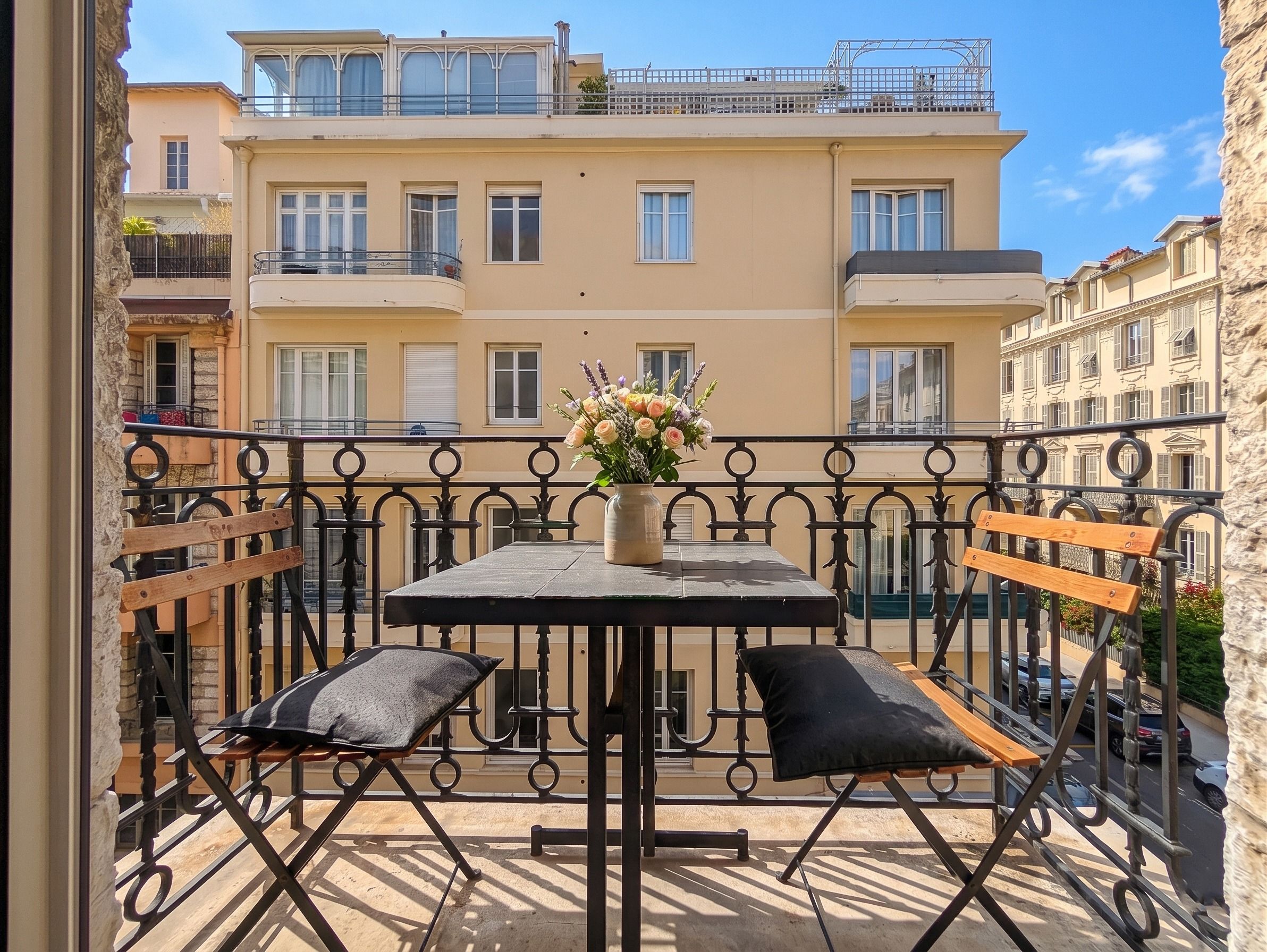
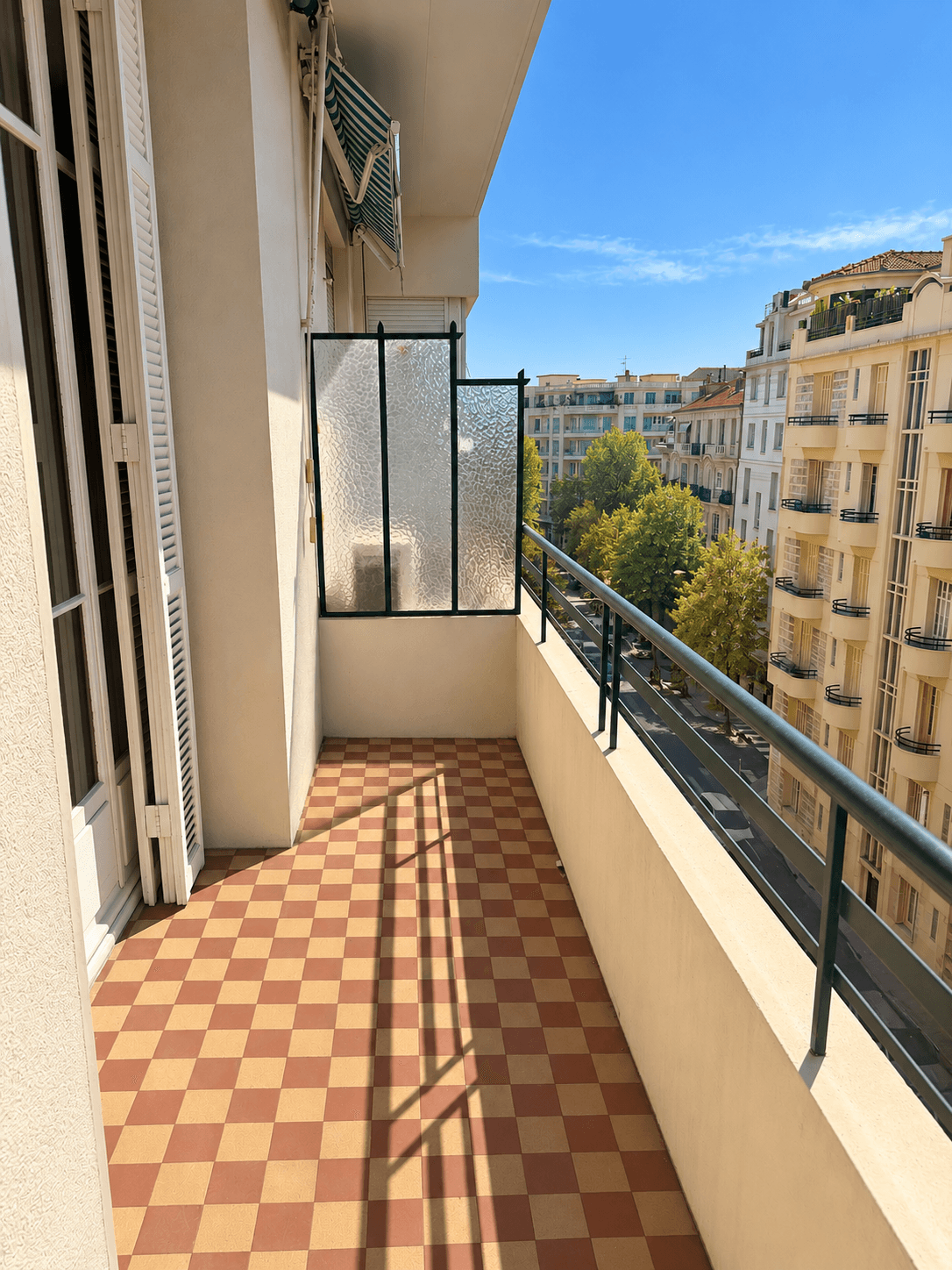
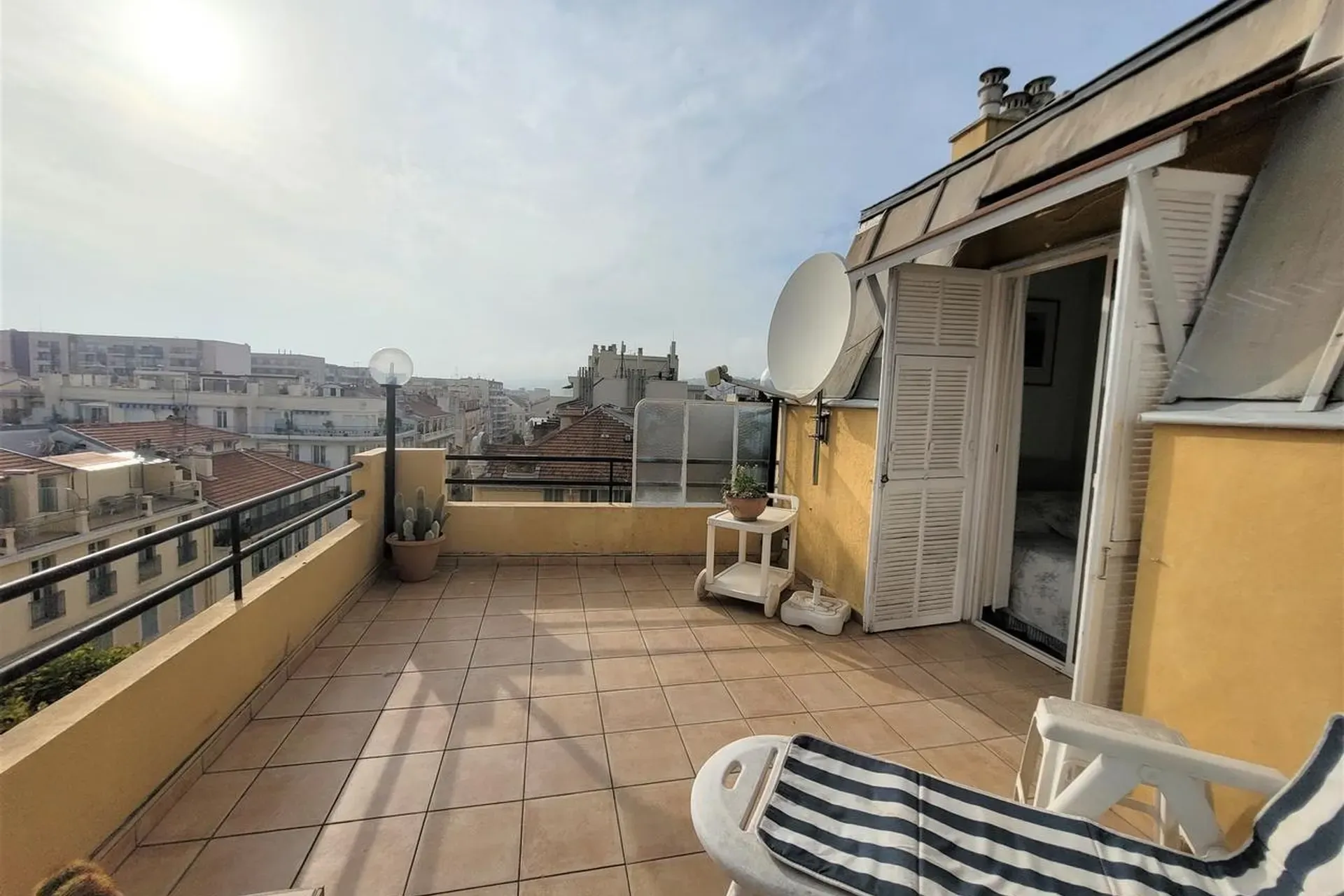
Light also deserves a more careful look than a description such as ‘bright’ suggests. Nice has abundant sunshine, but orientation, neighbouring buildings, shutters and the depth of a terrace all matter. Visit at different times of day where possible. A west-facing terrace can be ideal for evening meals, while a top-floor flat without air conditioning may be uncomfortably warm during the height of summer. Conversely, a ground-floor garden flat can be wonderfully cool but need more attention to privacy and humidity.
Noise should be assessed with equal honesty. The sound of scooters, deliveries, restaurants, school traffic and summer visitors varies greatly from one block to the next. Open the windows, stand on the balcony for a few minutes and walk the street rather than relying solely on a viewing appointment arranged at a quiet hour.
Price is local, not just a figure per square metre
Price per square metre is a useful starting point, not a valuation in itself. In Nice, a difference in floor level, lift access, terrace depth, outlook, condition and exact street can alter value substantially. A renovated two-bedroom flat on a sought-after avenue will not compare neatly with an unmodernised flat of the same size a few streets away.
The most reliable appraisal considers recent comparable sales, but also the pool of likely future buyers. A property with good natural light, sensible layout, a well-kept building and walkable services usually has wider appeal when the time comes to sell. Features that feel very personal, such as a difficult fourth-floor walk-up or an unusually dark internal bedroom, can narrow that audience.
For investors, the calculation needs to be more detailed still. Rental potential may be attractive, but local rules, building regulations, management costs and the practical burden of running a property should be considered before assuming an income figure. A smaller, straightforward flat in a well-connected quarter can sometimes be a safer proposition than a larger home with more complicated use restrictions.
Understand the French process before making an offer
Buying in France is orderly, but it is different from buying in Britain or Scandinavia. Once an offer is accepted, the next stage is usually the compromis de vente, a binding preliminary contract prepared through the notaire or agent. Buyers generally have a ten-day cooling-off period after notification of the signed contract. The agreement then sets out the conditions that must be met before completion, such as finance or relevant legal checks.
The notaire is a public official who handles the legal transfer and funds. The notaire is impartial rather than the buyer’s personal negotiator. This is why a buyer benefits from having someone focused on the practical details: comparing properties, framing an offer, following the timetable and making sure questions are answered before a commitment is made.
For resale property, allow for notaire fees and taxes commonly around 7 to 8 per cent of the purchase price, subject to the transaction. Agency fees need to be checked separately, as listings may state a price including fees or show who is responsible for them. If a mortgage is involved, begin the conversation with a suitable lender early. International income, residency and the source of funds can lengthen the process.
Documents may be in French and can feel dense even for experienced buyers. The diagnostics dossier, copropriété papers, title information and plans all deserve proper review. A clear translation of the practical implications is often more useful than a quick reassurance that everything is standard.
Think about the first month after completion
The signature is a milestone, not the end of the practical work. Insurance, electricity, internet, bank arrangements, keys, alarms and minor repairs need organising. For a second home, there may also be questions about regular checks, cleaning and the reliable tradespeople needed for small works.
This is particularly relevant when buying from overseas. It is sensible to establish who can meet a technician, receive furniture or respond if a water leak is reported while you are away. The most appealing home can become stressful if these details are left until the last moment.
At Warde Property, the work is kept personal from the first discussion through to these early practical steps after purchase. That continuity is useful because decisions made during the search - about location, condition, the building and intended use - remain relevant long after the keys change hands.
A good home in Nice should give you more than a beautiful arrival. It should make daily life feel uncomplicated: coffee within walking distance, a route you are happy to take at night, rooms that stay comfortable through the seasons and a building you can trust. Those are the details that tend to hold their value, and make ownership a pleasure.

Written by Joacim Örhall, Property Advisor & Director.