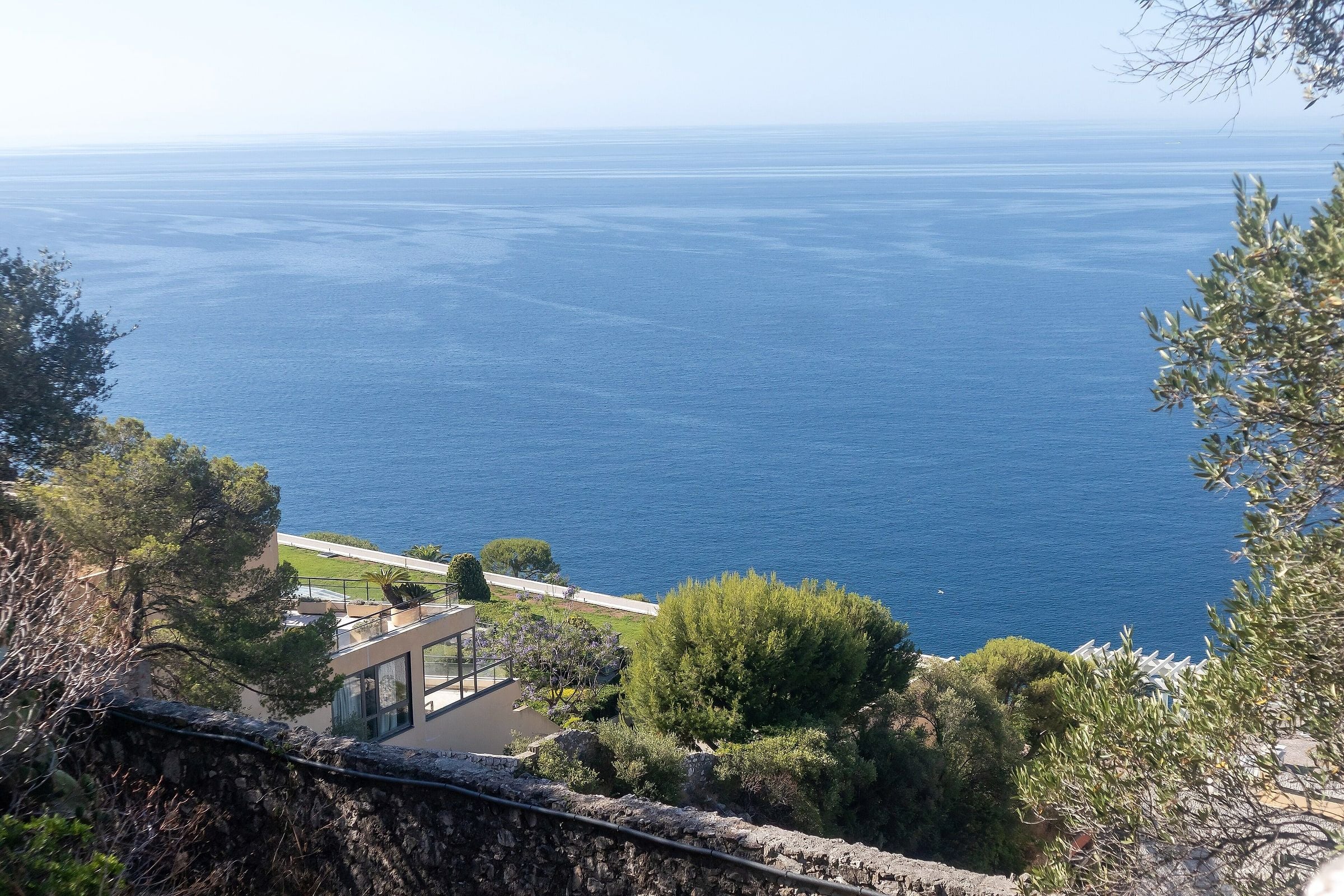
Living on Mont Boron: Nice’s green hill above the sea
Photo: Matti Blume · CC BY-SA 4.0 · edited
Photo: Matti Blume · CC BY-SA 4.0 · edited
Between the Port of Nice and the bay of Villefranche rises a wooded hill of villas, gardens and long views over the Mediterranean. Here is what it is like to live on Mont Boron, and what to know before you buy there.

Stand on the quay of the Port of Nice and look east, and the city simply stops. In its place is a hill covered in pines, with villas showing between the trees and a fort on the ridge. That is Mont Boron, and for many buyers it is the address in Nice: ten minutes from the centre, and a different world.
This guide goes further than our area page for Mont Boron: what daily life is like on the hill, what kinds of home you find there, and the practical questions to ask before you buy.
Where it is, and why it is different
Mont Boron is the headland that separates Nice from Villefranche-sur-Mer. Its western slope faces the port, the Old Town and the whole sweep of the Baie des Anges; its eastern slope looks down into the bay of Villefranche and across to Cap Ferrat. Few places on the coast offer both views from the same hill, and a handful of homes on the ridge have them from the same terrace.
The top of the hill is protected. The Parc forestier du Mont Boron covers the summit with pine, olive and carob, crossed by kilometres of footpaths, and the sixteenth-century Fort du Mont Alban stands on the saddle towards Villefranche. Nothing can be built there, which is why the hill has kept its green outline while the rest of the coast filled in.
A short history of the hill
Mont Boron was largely open hillside until the second half of the nineteenth century, when winter visitors began to build above the port. The best-known house is the Château de l’Anglais, the pink, turreted villa on the seaward slope, built in the 1850s by a retired British army engineer who had served in India. Others followed along the new corniche roads, and by the Belle Époque the hill was lined with villas in every style of the day.
Many of those villas are still there. Some remain single homes; others were divided into a few large apartments, which is how most people come to live on Mont Boron today.
The port at its foot
What makes the hill liveable is what lies below it. The Port quarter is one of the liveliest parts of Nice, with its antique dealers, wine bars, a daily market at Place Garibaldi a short walk on, and the terminus of the tram that runs through the centre to the airport.
Along the shore, the coast road passes the swimming spots that locals use from April to October: the rocks at Coco Beach and La Réserve, with ladders into deep, clear water. From the lower streets of Mont Boron these are a few minutes on foot.
What you find for sale
- Apartments in period villas: high ceilings, a terrace or a share of the garden, and often a view. Usually without a lift, in buildings of three or four homes.
- Apartments in modern residences: built from the 1960s onwards, many with a pool, a caretaker, large terraces and a garage. Less character, more comfort, and the widest views are often here.
- Villas: from modest houses on a terraced plot to large properties with a pool and sea views on both sides. They rarely come to the market, and the best are often sold quietly.
The view is what sets the price. Two apartments of the same size in the same street can differ greatly depending on whether the sea is in front of the living room or only glimpsed from the balcony. Sun matters too: the western slope has the afternoon and the sunset, the eastern slope the morning.
Practical questions to ask
- How will you get up and down? The hill is steep. Buses serve the main roads, but most residents use a car or a scooter. If you want to live on foot, look at the lowest streets, just above the port.
- Is there parking? Street parking is limited. A garage or a private space adds real value, and its absence is a daily nuisance.
- How is the home reached? Many villas sit above or below the road and are reached by steps. Count them, and think about shopping, luggage and later years.
- What can be built in front? Much of the hill is protected, but not every plot. Ask what the planning rules allow on the land between you and the sea.
- What does the garden cost to keep? Terraced gardens, retaining walls and a pool need regular work. In a co-owned villa, check how the costs are shared.
Who Mont Boron suits
It suits people who want quiet, greenery and a view without leaving the city: families who want a garden and the international schools within reach, and second-home owners who want to arrive from the airport in twenty minutes and wake up to the sea. It suits less well those who want to step out of the door into cafés and shops. For that, the Port, the Old Town or the Carré d’Or are the better choice, and our guide to the neighbourhoods compares them.
Frequently asked questions
Is Mont Boron a good place to live in Nice?
It is one of the most sought-after: green, quiet and with some of the best sea views in the city, ten minutes from the centre. The trade-off is that the hill is steep and most daily errands need a car, scooter or bus.
Can you live on Mont Boron without a car?
On the lowest streets above the port, yes: the tram, shops and the market are within walking distance. Higher up, a car or scooter makes life much easier.
What kind of property is there on Mont Boron?
Apartments in divided Belle Époque villas, apartments in modern residences with pools and garages, and a limited number of villas.
How far is Mont Boron from Nice airport?
About twenty to thirty minutes by car depending on traffic. The tram from the port also runs directly to the airport.
Looking for a home on Mont Boron? See what we have there now, or tell us what you are looking for.
Buying on the French Riviera
How a purchase works in France, the costs to plan for beyond the price, and how to choose the right area.
More from Articles
Selling your home in Nice: the process, step by step
From the first valuation to the day the keys change hands, selling a home in France follows a clear path. Here is what happens at each step, what you need to prepare, and how long it takes.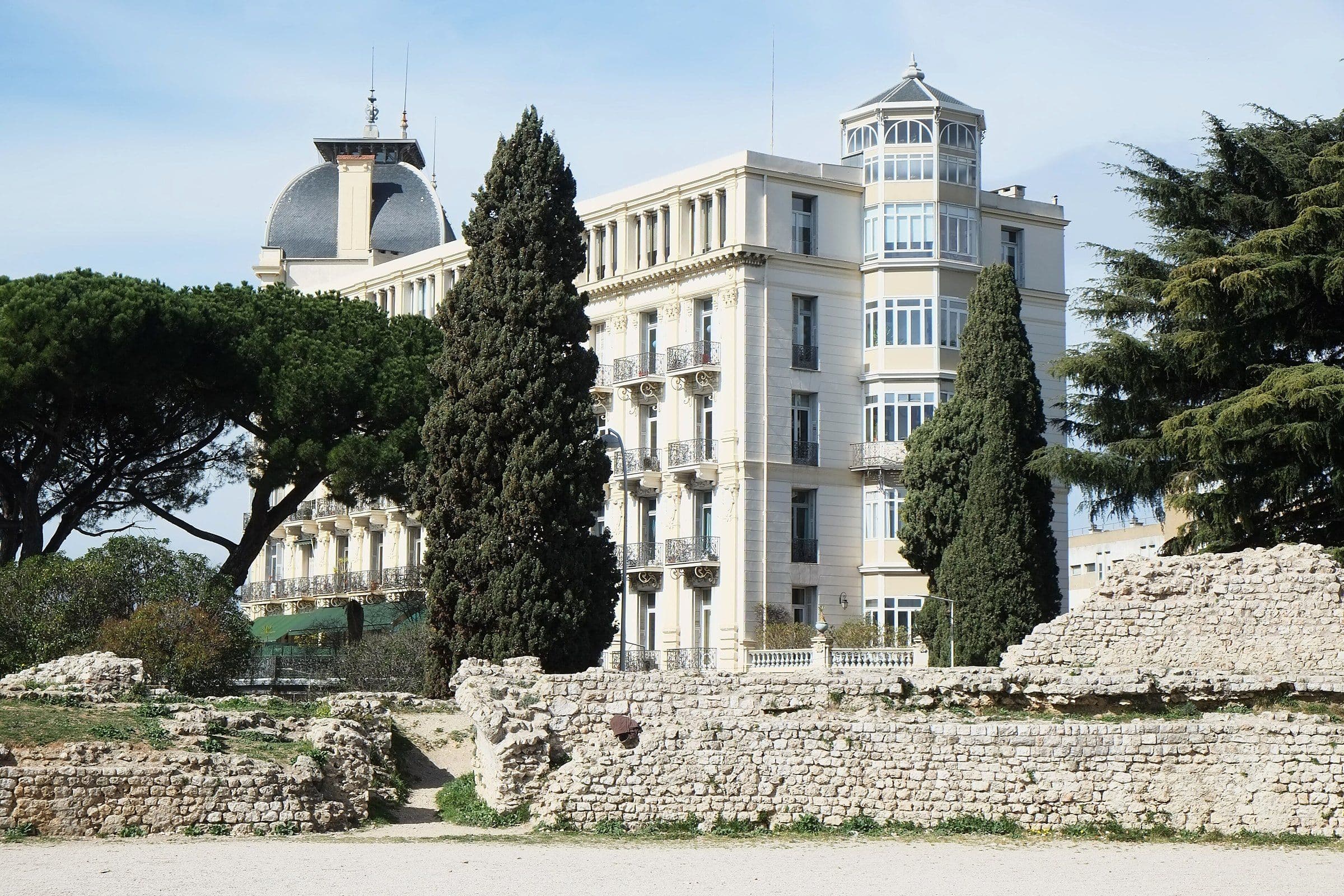
Buying a Belle Époque apartment in Nice: what to look for
High ceilings, mouldings, parquet and wrought-iron balconies: the Belle Époque apartment is the classic home of Nice. Here is where to find them, what makes a good one, and what to check before you buy.