7 min read
Essential checks before villa purchase in Nice
Essential checks before villa purchase in Nice: assess titles, boundaries, access, planning, costs and condition before you commit to a Riviera home.
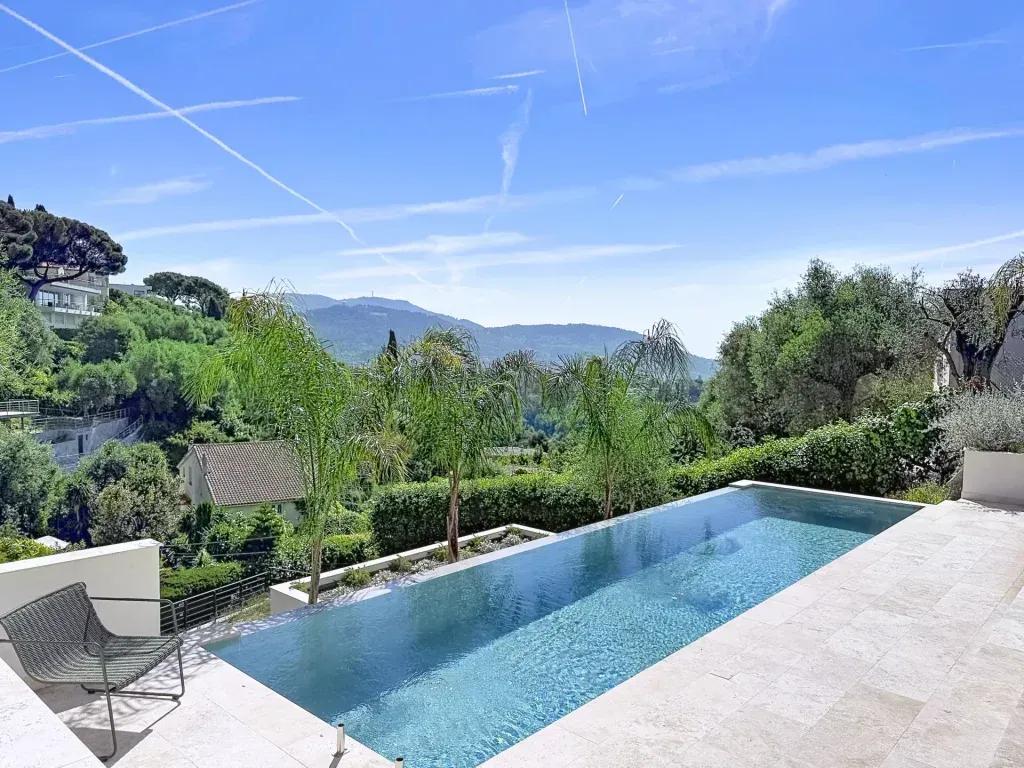
A villa can look entirely straightforward from the terrace: sea light over Cap Ferrat, mature pines around the pool, perhaps a quiet lane above Vence or in the hills behind Nice. Yet the essential checks before villa purchase are rarely visible during a first viewing. On the Côte d’Azur, a beautiful setting may also mean steep access, protected land, shared drainage or planning restrictions that change what you can do with the property.
The right approach is not to assume that a problem exists. It is to establish the facts early enough to negotiate properly, walk away if necessary, and arrive at the notaire’s office knowing what you are buying. This matters particularly for overseas buyers, who may not be familiar with the French documents, local planning rules or the practical differences between one commune and the next.
Start with the setting, not just the villa
A villa’s position affects daily life, resale appeal and running costs. Visit at different times if possible. A calm hillside road at 11am can become busy at the school run; a south-facing terrace that feels perfect in June may be exposed to strong wind in winter.
Ask how the property is reached in practice. Is the final stretch public road, a private lane or a right of way across a neighbour’s land? Can two cars pass? Is there space to turn, and can delivery vehicles, refuse collection or emergency services reach the house easily? These details are especially relevant on older roads around Cimiez, Gairaut, Villefranche-sur-Mer and the villages above the coast.
Boundaries deserve equal attention. Hedges, walls and planted banks do not always follow the cadastral line. The cadastral plan is useful for identifying plots, but it is not a legal survey of boundaries. Where a boundary appears unclear, a géomètre-expert can advise before completion. It is a modest cost compared with a later dispute over a driveway, retaining wall or swimming pool edge.
Essential checks before villa purchase: title and rights
The notaire will carry out legal due diligence and confirm the seller’s title, but a buyer should understand the practical implications of what appears in the documents. In France, easements - servitudes - may allow a neighbour access, drainage or utility connections across the land. Some are obvious; others appear only in historic deeds.
Ask specifically whether there are rights of way, shared walls, shared access arrangements or obligations to maintain a private road. If the villa sits within an estate or on a private domain, there may be an association syndicale libre, with annual charges and rules affecting gates, exterior works, landscaping or rentals.
It is also worth confirming exactly what is included in the sale. Built-in kitchens and fixed equipment usually remain, but garden furniture, freestanding appliances and certain exterior items may not. A clear inventory avoids awkward assumptions between signing the preliminary contract and handover.
Check planning history and what can be changed
A pool house, covered terrace, additional bedroom or converted garage can add real value - provided it was authorised. Request planning permissions, declarations of completion and any relevant certificates of conformity for extensions, pools, terraces and outbuildings. Older work is not automatically problematic, but missing paperwork needs careful examination.
The local plan, known as the PLU, determines what may be built or altered. Rules vary sharply between communes and even between neighbouring plots. A villa in a protected landscape, near a listed building or within a coastal zone may face tighter limits on extensions, roof changes, tree removal and new pools.
Do not rely on an informal assurance that ‘permission should be possible’. Ask the mairie for a certificat d’urbanisme where future works are central to your decision. If your plans are substantial, speak to an architect or planning specialist before you commit. The answer may still be yes, but it should be based on the plot, the current rules and a realistic reading of local practice.
Read the technical file, then inspect the house properly
French sales include a diagnostic file, the dossier de diagnostic technique. It may cover energy performance, asbestos, lead, termites, electricity, gas, natural risks and, depending on the property, sanitation. These reports are valuable, but they are not a full building survey and should not be treated as one.
For an older Riviera villa, an independent inspection is often sensible. Pay particular attention to the roof, waterproofing, façades, shutters, windows, drainage and retaining walls. Hairline cracks can be harmless settlement, but cracks near terraces, slopes or structural openings should be assessed rather than dismissed. Salt air near the coast, heat, sudden rain and long periods of sun all leave their mark on materials.
Ask about the age and service history of the heating, air-conditioning, hot-water system and pool equipment. Air-conditioning may be essential for summer comfort, but older systems can be noisy, inefficient or difficult to replace in a protected area. If there is a fireplace or wood burner, check its condition and local restrictions on use.
Water deserves a practical conversation. Is the property connected to mains drainage, or does it use an individual septic system? If it is non-collective sanitation, obtain the SPANC inspection and establish whether any upgrade is required. For gardens and pools, ask how irrigation is supplied and what electricity and water bills have been in recent years.
Understand natural risks and insurance before committing
The Côte d’Azur is prized for its terrain and climate, but those qualities bring particular risks. The mandatory natural-risk report, often called an ERP, identifies matters such as flood exposure, seismic zones, wildfire risk, clay shrink-swell movement and coastal considerations. Read it in relation to the actual villa, not as a formality at the back of a file.
On a hillside property, observe water management. Look at gutters, drains, slopes, retaining walls and signs of runoff after rain. In wooded areas, ask about clearing obligations and access for fire services. Insurance can be available, but premiums, exclusions and insurer requirements vary. It is wise to obtain an indication of cover before signing, particularly where a property has a history of claims or lies in a recognised risk area.
Calculate the ownership cost with French taxes in mind
The purchase price is only part of the commitment. Resale homes generally attract acquisition costs of roughly 7 to 8 per cent, commonly referred to as notaire’s fees, although much of this is tax and disbursements rather than the notaire’s remuneration. Your notaire can provide a precise estimate.
Then consider taxe foncière, insurance, utilities, pool and garden maintenance, security, internet, private-road charges and any local association fees. If the villa will be used only for holidays, factor in caretaking and winter checks. A property with a large garden among the pines may be exactly what you want, but it requires regular care during dry months and after storms.
For buyers considering letting, check local rules before treating rental income as certain. Registration requirements and restrictions can differ between Nice, coastal towns and inland communes. The property’s legal status, number of occupants and any estate rules can all matter.
Use the contract to protect the decision
Once an offer is accepted, the preliminary contract - often a compromis de vente - is the moment to make essential conditions explicit. Finance, planning confirmation, sale of another property or satisfactory technical findings can sometimes be included as conditions precedent when properly agreed. They must be specific and realistic, not an afterthought.
After notification of the signed preliminary contract, private buyers usually have a ten-day cooling-off period. Use the time carefully, but do not wait until then to start asking questions. The more that is clarified before the compromis, the less likely it is that the transaction becomes tense or delayed.
A good adviser will coordinate the questions, help separate minor maintenance from genuine risk, and keep communication moving between the seller’s agent, notaire and relevant specialists. Warde Property approaches villa searches this way: with one person on the ground who can test the details, explain them plainly and remain available after the keys are handed over.
The best villa purchases retain their pleasure after the first view. Take time to understand the land beneath the view, the documents behind the rooms and the costs behind the lifestyle. Then you can make your decision with clear eyes and enjoy the place for what it truly offers.

Written by Joacim Örhall, Property Advisor & Director.