The real costs of buying a home on the French Riviera
The price on the listing is only part of the story. From notary fees and transfer taxes to agency fees, mortgage costs and annual running costs, here is what buying a home in Nice and on the French Riviera really costs.

When you buy property in France, the purchase price is only the starting point. On top of it come notary fees and taxes, possibly agency and financing costs, and then the annual costs of owning the property. None of these are unusual, but they are often underestimated by international buyers. In this article we go through each cost in turn and finish with a worked example for a typical apartment in Nice.
Notary fees and taxes on purchase
The largest extra cost is what the French call frais de notaire, or notary fees. They are paid by the buyer at completion, and despite the name, most of the amount is not the notaire’s own fee but taxes collected on behalf of the state and the département.
Existing (resale) property
For a property more than five years old, notary fees typically amount to around 7–8% of the purchase price. They are made up of:
- Transfer taxes (droits de mutation): by far the largest part. In the Alpes-Maritimes, which covers Nice and the eastern Riviera, the total rate is 5.81% of the price.
- The notaire’s fee (émoluments): set by a national, regulated scale and decreasing as the price rises – a little under 1% of the price plus VAT for a typical apartment.
- Land registry contribution: 0.1% of the price.
- Disbursements and formalities: the cost of documents, certificates and searches, usually a fixed amount of around one to two thousand euros.
New-build property
For a new-build or off-plan property (VEFA), the transfer tax is much lower because VAT is already included in the price. Total notary fees are typically only around 2–3%. New-builds also benefit from builder warranties, including the ten-year structural guarantee (garantie décennale).
Two ways to reduce the tax base
Transfer taxes are calculated on the price of the property itself, so two items can legitimately be excluded from the base:
- Furniture: if the sale includes furniture, its value can be listed separately in the contract and is not subject to transfer tax, as long as the valuation is realistic.
- Agency fees paid by the buyer: when the agency fee is payable by the buyer and stated separately in the contract, it is not included in the taxable price.
Agency fees: who pays what?
Estate agency fees in France are typically around 4–8% of the price, with lower percentages for higher-value properties. They are set by each agency and must be clearly displayed.
Most listings in Nice show a price including fees (FAI – frais d’agence inclus), meaning the fee is paid by the seller and already built into the price you see. Some listings state that the fees are payable by the buyer (à la charge de l’acquéreur), in which case the price shown excludes the fee. Always check which applies when comparing properties – and remember that the same property can appear on several agencies’ websites with different prices.
A buyer’s agent like Warde Property works only for the buyer. Our fee is agreed in writing before the search begins, so you know exactly what you will pay. Because we negotiate on your behalf and give you access to properties beyond the open market, the fee is often more than offset by a better purchase price and a better choice of property.
Mortgage, surveys and diagnostics
Mortgage costs
If you finance the purchase with a French mortgage, budget for:
- Arrangement fees: usually from a few hundred to around 1,500 euros, depending on the bank.
- Loan guarantee: either a guarantee from a specialised institution or a mortgage registered by the notaire, typically around 1–2% of the loan amount.
- Borrower insurance: required in practice by French lenders, covering death and disability. You are free to choose an insurer other than the bank.
- Broker fees: if you use a mortgage broker.
Non-residents can borrow from French banks, but usually need a larger deposit – often 20–30% of the price – and should expect a more thorough review of their income and assets.
Surveys and diagnostics
The seller pays for the mandatory diagnostic reports, which cover energy performance (DPE), asbestos, lead, electrics, gas, termites, natural risks and, for apartments, the certified living area. There is no mandatory structural survey in France, but for older buildings or properties needing renovation, an independent inspection by a building surveyor or architect is often a wise investment, typically costing from several hundred to around 1,500 euros. If you plan to renovate, ask for contractors’ quotes before you commit.

Running costs: what you pay every year
Property tax (taxe foncière)
Every owner pays an annual property tax, the taxe foncière. It is calculated by the local authorities from a notional rental value of the property, and varies by location, size and standard. For a typical apartment in central Nice, expect anywhere from around one to two thousand euros a year.
Council tax on second homes
The taxe d’habitation has been abolished for main residences, but it still applies to second homes. Nice, like many cities in high-demand areas, applies a surcharge on second homes, so holiday-home owners should include it in their budget. If the property is your main residence, this tax does not apply.
Service charges (charges de copropriété)
Almost all apartments in Nice are part of a co-ownership (copropriété), and owners pay service charges for the upkeep of the building: cleaning, the lift, the concierge, insurance of the common parts, maintenance and the building manager’s fee. Charges vary enormously, from modest amounts in a simple building without a lift to several thousand euros a year in a residence with a concierge, gardens and a pool. Major works, such as a façade renovation or a new roof, are voted separately by the owners and paid on top of the regular charges. That is why reviewing the minutes of recent owners’ meetings is so important before you buy.
Home insurance
All apartment owners must have liability insurance, and a comprehensive home insurance policy (assurance habitation) is strongly recommended. For a typical apartment, this costs a few hundred euros a year.
Other costs
Add utilities (electricity, water, internet), any property management or key-holding services if you are abroad, and tax on rental income if you let the property. Owners whose net real estate assets in France exceed 1.3 million euros may also be liable for the French real estate wealth tax (IFI).

Worked example: a 2-bedroom apartment in Nice
Let us take a typical example: a 70 m² two-bedroom apartment in an older building in central Nice, bought for €550,000, with the agency fee paid by the seller and included in the price. The buyer pays cash.
Costs on purchase
Item | Amount |
|---|---|
Purchase price (agency fee included) | €550,000 |
Transfer taxes (5.81%) | €31,955 |
Notaire’s fee incl. VAT | €5,859 |
Land registry contribution (0.1%) | €550 |
Disbursements and formalities (estimate) | €1,200 |
Total notary fees (approx. 7.2%) | €39,564 |
Optional building inspection (estimate) | €800 |
Total, excluding buyer’s agent fee | €590,364 |
Annual running costs (indicative)
Item | Per year |
|---|---|
Property tax (taxe foncière) | €1,200–2,000 |
Service charges (building with lift) | €2,000–3,500 |
Home insurance | €200–400 |
Council tax, second homes only | €1,000–2,000 |
Total, main residence | €3,400–5,900 |
Total, second home | €4,400–7,900 |
The exact figures depend on the building, the location and the property, but the example shows the rule of thumb: for a resale apartment, budget around 7–8% on top of the price for notary fees, plus your own advisers’ fees, and plan for annual running costs of roughly 1% of the property’s value.
How Warde Property helps you keep control of costs
As your buyer’s agent, we help you see the full cost before you commit. We check the service charges and the co-ownership’s finances, identify planned works, ask the notaire for a precise estimate of the fees, and make sure furniture and fees are handled correctly in the contract. Most importantly, we negotiate the price on your behalf, which is where the biggest savings are made.
Planning to buy on the French Riviera? Contact Warde Property for a no-obligation conversation, and we will help you build a realistic budget for your purchase.
This article provides general information and does not constitute legal, tax or financial advice. Figures are indicative and rates may change; always confirm the costs of your purchase with your notaire or adviser.
Buying on the French Riviera
How a purchase works in France, the costs to plan for beyond the price, and how to choose the right area.

More from Articles

Selling your home in Nice: the process, step by step
From the first valuation to the day the keys change hands, selling a home in France follows a clear path. Here is what happens at each step, what you need to prepare, and how long it takes.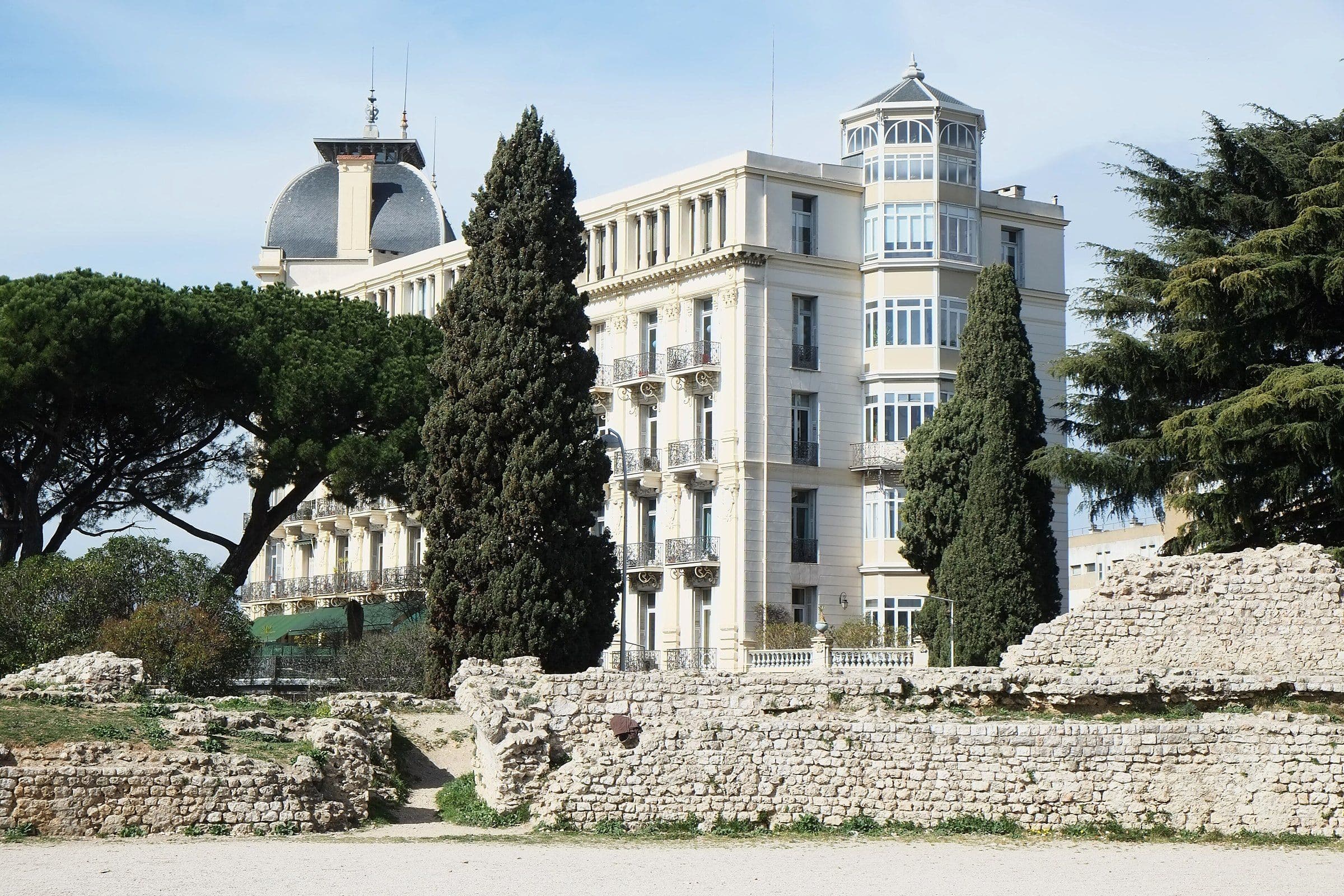
Buying a Belle Époque apartment in Nice: what to look for
High ceilings, mouldings, parquet and wrought-iron balconies: the Belle Époque apartment is the classic home of Nice. Here is where to find them, what makes a good one, and what to check before you buy.