7 min read
Best schools for Nice families moving to France
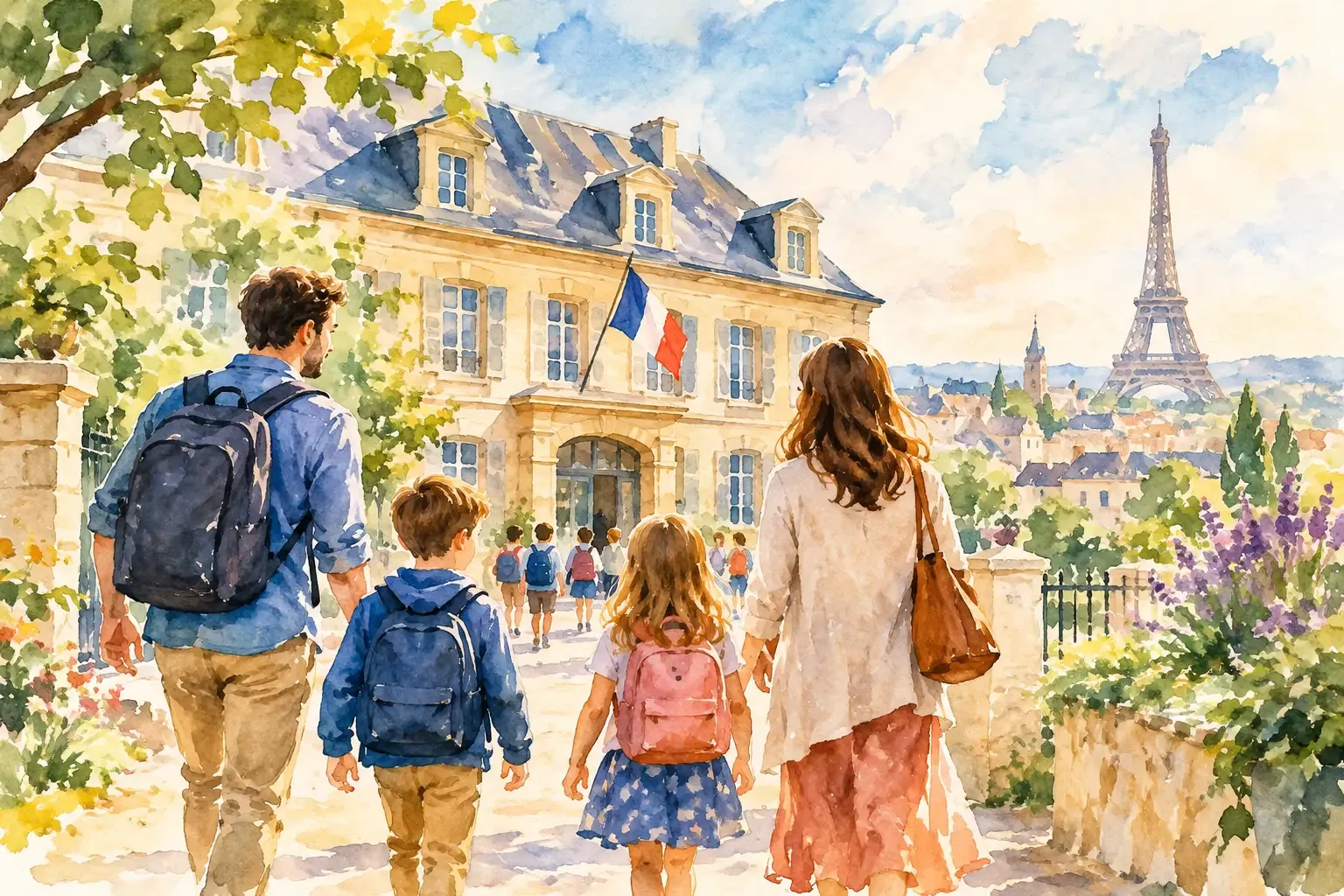
Choosing among the best schools for Nice families means weighing curriculum, catchment, commute and admissions before you choose a neighbourhood to buy in.
A school decision can change the right property decision entirely. The best schools for Nice families are not simply the ones with the strongest reputation. They are the schools that fit your child’s language, temperament and future plans, while making the daily journey workable from the part of Nice where you want to live.
For a family buying from abroad, it is sensible to treat school and home as one conversation. A bright flat near the sea may look ideal on a viewing day, but a 45-minute uphill school run in July heat or winter rain can soon alter the picture.
What “best schools for Nice families” really means
Nice offers several routes: the French state system, private schools under contract, bilingual or international education, and a small number of alternative approaches. There is no universal best choice. A child arriving at six with little French may need something quite different from a bilingual teenager aiming for the International Baccalaureate, or from a family planning a permanent move into French life.
The French system is often a very good option for younger children. It is structured, academically demanding and deeply connected to local life. Children can settle remarkably quickly when they are surrounded by French every day, although the first year requires patience and proper support at home. For older pupils, the transition can be more demanding, particularly where written French and subject vocabulary are concerned.
International and bilingual schools offer continuity for families moving between countries, with English-language teaching and internationally recognised qualifications. The trade-off is cost, a more competitive admissions process and, depending on the school, a longer commute. Private French schools can sit somewhere between the two: often with a strong pastoral reputation and their own admissions process, but still largely following the French curriculum.
The main school options around Nice
French state schools
French state education is free, apart from lunches, activities and the usual supplies. At primary level, children are generally allocated a school according to the home address. This is known as the carte scolaire, or catchment system. A place cannot be assumed simply because a school is nearby on a map, and catchment boundaries can change.
For secondary education, allocation is also governed by address, though families may apply for particular programmes or request an exception in certain circumstances. Nice has well-regarded collèges and lycées across the city, including central options that are convenient from areas such as Libération, Valrose and Cimiez. It is worth looking beyond broad reputation: ask about language sections, transport, lunch arrangements and the realistic journey at school-run time.
Private French schools
Private schools under contract with the state follow the national curriculum but manage admissions themselves. Families are often drawn to their smaller feel, established routines or pastoral approach. Places can be limited, and admission is not tied to your address in the same way as a state primary school.
These schools can suit a family committed to French education but seeking a more individual admissions conversation. They may also be practical for parents whose preferred neighbourhood falls outside the catchment of a particular state school. Fees are usually far lower than at international schools, but they vary and should be checked directly each year.
International and bilingual education
The International School of Nice, in the west of the city, is an important option for internationally mobile families. It offers an English-speaking environment and international pathways from early years through to older pupils. For a family living in Fabron, the western hills, Carras or near the Promenade des Anglais, the daily logistics can be straightforward.
Families also consider schools further afield, including options towards Sophia Antipolis, Valbonne, Mougins and Cannes. These may provide a particular curriculum, language balance or year group availability that Nice itself cannot. The journey matters, however. A route that appears manageable outside peak hours may be very different on weekday mornings, especially when the A8 or the roads around Antibes are busy.
Bilingual education is not one single model. Some schools teach mainly in English with French lessons; others teach the French curriculum with substantial English provision. Ask precisely how much teaching is delivered in each language, what support exists for children joining mid-year and which qualifications pupils take at 16 and 18.
Choose the school before committing to a street
In property terms, the most useful question is often not, “Which is Nice’s best school?” It is, “Where can our family live well while getting to this school every day?”
Cimiez appeals to many families for its calmer streets, Belle Époque buildings, gardens and proximity to several schools. It is a pleasant choice for those who want a residential feel without leaving the city, though homes can be on slopes and walking routes should be tested rather than assumed.
Valrose, Borriglione and Libération offer a more lived-in, central rhythm. There are shops, markets, tram access and a good choice of flats, making these quarters practical for families who value independence for older children and less reliance on a car. Morning traffic can still be busy around school gates, so a property visit at 10.00 is not enough.
Fabron and the western side of Nice work well for some international-school families and for those wanting more space, newer residences or easier access towards the airport. The trade-off can be distance from the historic centre and a greater dependence on buses or a car. Mont Boron and the eastern hills are beautiful, but they require particularly honest thinking about travel time and after-school activities.
A property’s advertised proximity to a school should always be verified. “Five minutes away” can mean five minutes by scooter, 15 minutes on foot, or much longer when parking and collection queues are included.
Admissions require an early, practical plan
International and private schools may have waiting lists, assessments or fixed admissions points. Contact them early, particularly for popular year groups. Ask whether there is a place for your child’s specific age, not simply whether the school is accepting applications in general.
For state primary schools in Nice, registration usually begins with the mairie and depends on a confirmed local address, supporting documents and the relevant timetable. Your final allocation comes afterwards. Families buying before they have a French address sometimes find this uncomfortable, but it is a normal part of the process. Avoid buying a home on the assumption that an exception to the catchment rules will be granted.
Keep a clear file containing passports, birth certificates, previous school reports, vaccination records, proof of address and, where needed, translated documents. Schools may also ask for a certificate of school attendance or records from the child’s previous system. The administrative detail is manageable, but it takes longer when documents are scattered between countries.
Look beyond league tables and brochures
Academic results matter, especially for older pupils, but they are only one part of the decision. Visit if possible. Notice how staff speak to children, whether pupils seem settled, how the entrance feels at drop-off and what happens between lessons. Ask about learning support, French-as-an-additional-language provision, homework expectations, school meals and supervision before and after the formal day.
For families new to France, the rhythm of the school week can take adjustment. Lunch at the cantine, Wednesday activities, holiday dates and after-school care need organising early. In some neighbourhoods, places for périscolaire care and extracurricular clubs are as valuable to working parents as the school place itself.
It is also sensible to consider friendships and language outside the classroom. A child in an English-language school may still gain confidence in French through sport, music, local clubs and simply living in a French neighbourhood. Equally, a child in a French school may need structured English support if a later move to the UK or another international system is likely.
A calmer way to make the move
Some families rent for a school year before buying, particularly if they are uncertain about language choice or need time to understand Nice’s quarters. It adds one move, but it can prevent a much larger compromise later. Others need to buy first for work, residency or financial reasons, in which case a careful shortlist of addresses and realistic transport checks become even more important.
When helping buyers compare homes, Warde Property treats the school run as part of the property brief: the route on foot, the tram connection, the hill, the parking, and the ordinary Tuesday morning reality. The right answer is rarely the most fashionable postcode. It is the address that gives your child a good school day and gives the rest of the family room to enjoy life in Nice.
Before making an offer, stand outside the prospective school at collection time, then travel back to the property by the route you would actually use. That small piece of local research often tells you more than any brochure can.

Written by Joacim Örhall, Property Advisor & Director.