Apartment versus villa French Riviera choices
Apartment versus villa French Riviera: compare privacy, upkeep, location and rental appeal to choose a Côte d’Azur home with confidence for buyers abroad

A morning coffee above Nice’s Promenade des Anglais and lunch beneath the pines of Cap d’Antibes can both feel unmistakably Riviera.
Yet the property behind each experience asks for a very different commitment. The flat versus villa French Riviera decision is rarely only about bedrooms, a pool or a sea view. It is about how often you will be here, what you want your days to look like, and how much responsibility you are happy to carry from abroad.
For some buyers, a lock-up-and-leave flat in a handsome Belle Époque building is the sensible route to spontaneous weekends and an easy walk to restaurants, markets and the beach. For others, a villa with terraces, mature planting and space for family is the reason to own on the Côte d’Azur at all. Both can be excellent purchases. The right answer lies in the detail of location, building, lifestyle and ownership costs.
Flat versus villa French Riviera: start with your real use
The most useful question is not, “Which property is better?” It is, “How will we use it in February as well as August?” A second-home buyer visiting four or five times a year may value simplicity above all else. A family relocating permanently may need outdoor space, parking, a practical school run and room for guests. An investor will also look closely at rental demand, local restrictions and the property’s ability to stand out in a competitive market.
Flats tend to suit buyers who want Riviera life close at hand. In Nice, that might mean a period flat in the Carré d’Or, a sea-facing home in the Port or a quieter address in Cimiez, where avenues rise towards museums and leafy residential streets. You can step out for a morning swim, collect provisions from the market and leave the car unused for days. This convenience has lasting appeal, particularly for international owners who do not want every arrival to begin with a list of maintenance tasks.
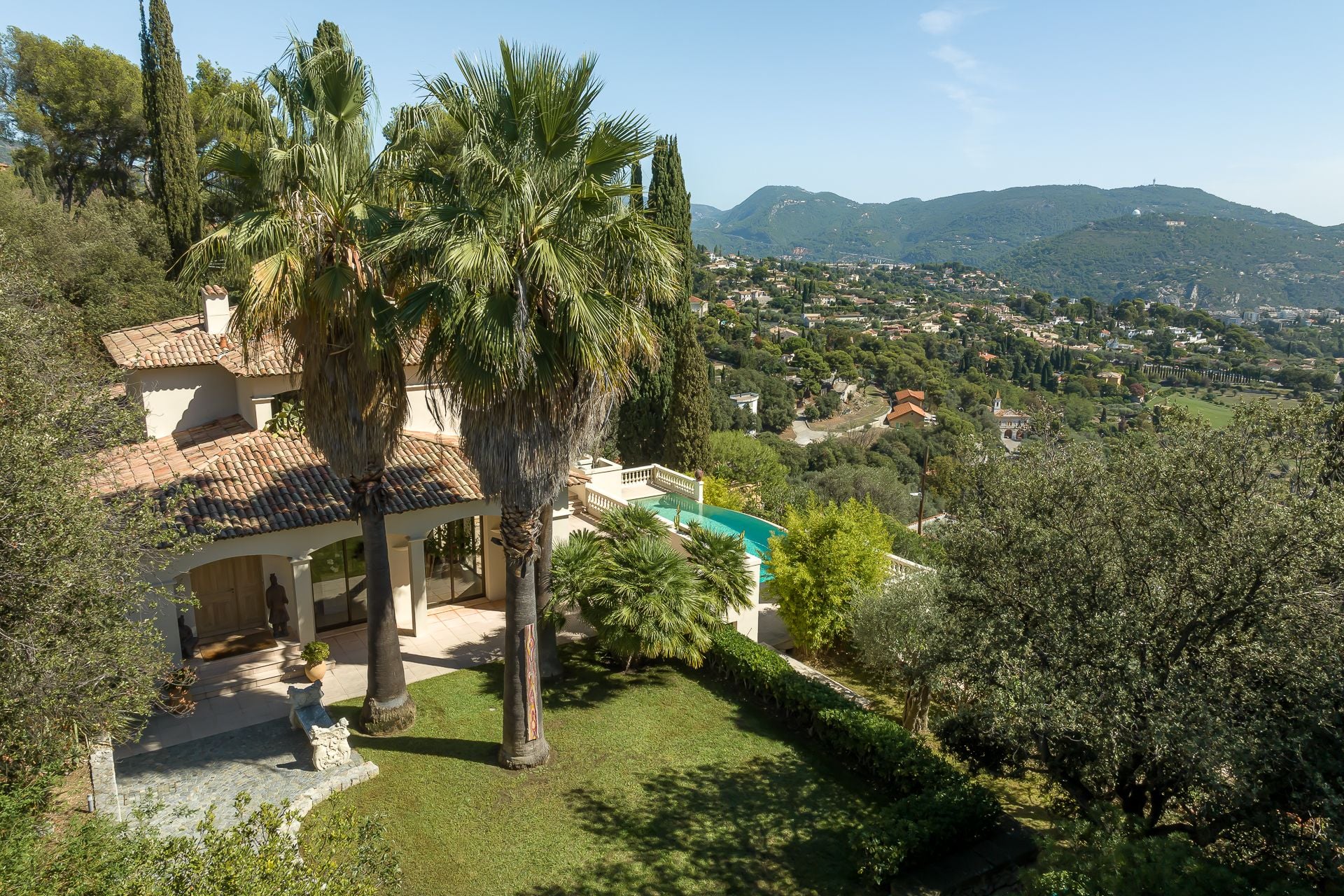
A villa changes the rhythm. In the hills above Nice, in Villefranche-sur-Mer, Saint-Jean-Cap-Ferrat, Mougins or along Cap d’Antibes, the reward is greater privacy and a fuller connection to the landscape. There may be olive trees, a pool, an outdoor kitchen and a view that opens from the harbour to the Esterel. It can be a magnificent setting for long holidays and multi-generational gatherings. It can also require regular oversight when you are elsewhere.
The practical case for a flat
A well-chosen flat offers an efficient form of ownership. Exterior maintenance, roof works, communal gardens and often building insurance are managed through the copropriété, the French co-ownership structure. Owners contribute through service charges, known as charges de copropriété. These vary considerably, especially where there is a lift, concierge, landscaped grounds, heating or a swimming pool, but the shared arrangement can make ownership more predictable.
Security is another advantage. Buildings with controlled entry, a gardien or simply year-round neighbours can feel reassuring when a property is empty for periods. A flat with a lift, air conditioning, a terrace and underground parking can be particularly attractive to buyers who plan to use it later in life, or to let it occasionally where rules permit.
Location is often the strongest argument. In central Nice, the best addresses put the city’s pleasures within reach: ochre lanes in Vieux Nice, baroque squares, galleries, bakeries and the seafront. A compact two-bedroom property can offer more day-to-day enjoyment than a much larger home that requires a drive for every errand.
There are compromises. You may share walls, entrances and decisions with other owners. Major works can be voted on by the copropriété, and an attractive low service charge is not automatically good news if essential maintenance has been deferred. Before committing, a buyer should understand the building’s recent and planned works, the level of charges, its reserve funds, and whether there are restrictions affecting renovations or furnished rentals. The minutes of recent co-owners’ meetings often reveal far more than a quick viewing can.
Noise also deserves honest attention. A lively address near restaurants or the Promenade can be wonderful in summer and less appealing at night. Conversely, a tranquil building may be too quiet for a buyer seeking an animated pied-à-terre. Street-by-street knowledge matters in Nice, where the feel of a neighbourhood can change within a few minutes’ walk.
What a villa gives you, and what it asks in return
A villa is usually the more emotional purchase. It provides the luxury of private outdoor living: breakfast on a shaded terrace, children in the garden, a pool after the beach, and enough space to host friends without booking tables or rooms. In sought-after enclaves, Belle Époque villas among the pines and contemporary homes with broad sea views can offer a level of privacy that central apartments cannot replicate.
For a permanent move, the extra room can be genuinely practical. A study, guest suite, laundry room, storage and off-street parking are not minor benefits when daily life replaces holiday use. A villa may also offer scope to improve, extend or reconfigure, subject to planning rules and local permissions. Buyers who enjoy a project can create significant value through thoughtful renovation, especially where a home has strong bones, a good plot and a compelling position.
The trade-off is responsibility. A detached property needs active care: pool servicing, gardening, gates, alarms, roof inspections, drainage, façades, air-conditioning, shutters and sometimes septic systems. Coastal weather is beautiful but demanding. Salt air, heat and winter rain can expose neglected maintenance quickly.
Distance adds another layer. If you live in London, Stockholm or elsewhere, a trusted local team becomes essential rather than optional. Someone needs to check the property after storms, meet tradespeople, prepare the house before arrival and notice small problems before they become expensive ones. These running costs should be considered alongside the purchase price, not afterwards.
Accessibility also varies sharply. A villa with a sweeping view may sit above steep roads, have limited turning space or be a considerable distance from shops. That is not necessarily a drawback, but it should match your habits. Buyers who imagine walking to dinner each evening may be happier in a village property or a central flat. Those who value quiet, land and privacy may find the drive an easy exchange.
Costs, resale and rental potential
Neither property type is automatically the better financial choice. Quality, micro-location and presentation matter more than the label. A top-floor apartment with a proper terrace and open sea view can command exceptional demand, while an isolated villa with difficult access may have a narrower buyer pool despite generous internal space.
For flats, budget beyond the purchase price for service charges, property tax, insurance, potential works and, where relevant, parking. Ask whether the building is professionally managed and whether substantial façade, roof or lift works are anticipated. For villas, allow for utilities, maintenance contracts, gardening, pool care, security and capital expenditure. Older properties can be charming, but buyers should commission careful technical due diligence rather than assuming a renovation is cosmetic.
Rental potential should be approached with equal care. Central, well-presented apartments near the beach, transport and amenities often appeal to a broad audience for longer stays and, subject to local rules, holiday lets. A villa can command strong seasonal interest when it has the right location, pool, parking and outdoor space, but it may carry higher operating and management costs. Local regulations, building rules and registration requirements need checking before rental income becomes part of the buying calculation.
Resale favours homes that make life easy for the next owner. For a flat, that may mean a lift, outdoor space, air conditioning, natural light and an address close to amenities. For a villa, it often means manageable grounds, straightforward access, parking, a usable layout and a view that is protected as far as possible. A dramatic staircase, a vast garden or a remote hillside setting may delight one buyer and deter another.
Choose the property that reduces friction
A helpful way to decide is to picture an ordinary arrival. You land on a Friday evening. Do you want to take a taxi, open the door and walk out for supper? A flat may be the natural choice. Would you rather collect family from the airport, unpack into a generous kitchen and spend the weekend around your own pool? A villa may justify the additional management.
It is also worth separating aspiration from necessity. Many buyers begin convinced they need a villa, then discover that a generous terrace in the right part of Nice gives them more actual Riviera time. Others start with a flat brief and realise that privacy, a garden and space for visiting children are non-negotiable. Viewing across several neighbourhoods and property types helps that distinction become clear.
The most satisfying Côte d’Azur home is not the one with the longest feature list. It is the one that makes returning feel uncomplicated, whether that means an elegant flat above the city or a house waiting quietly among the pines.
More from Articles

Riviera property: what a good purchase requires
Riviera property demands more than a view. Learn how location, building rules, costs and local advice shape a confident purchase on the Côte d’Azur today.
Mont Boron villas for sale, chosen carefully
Considering Mont Boron villas for sale? Understand views, access, planning, condition and local advice before making a considered purchase in Nice today.
Riviera property: what a good purchase requires
Riviera property demands more than a view. Learn how location, building rules, costs and local advice shape a confident purchase on the Côte d’Azur today.Mont Boron villas for sale, chosen carefully
Considering Mont Boron villas for sale? Understand views, access, planning, condition and local advice before making a considered purchase in Nice today.